Hydrogen's 2026 infrastructure gap sits between the plant and the buyer
The IEA's latest review and Europe's signed grant agreements show why production support and a usable delivery chain are separate milestones.
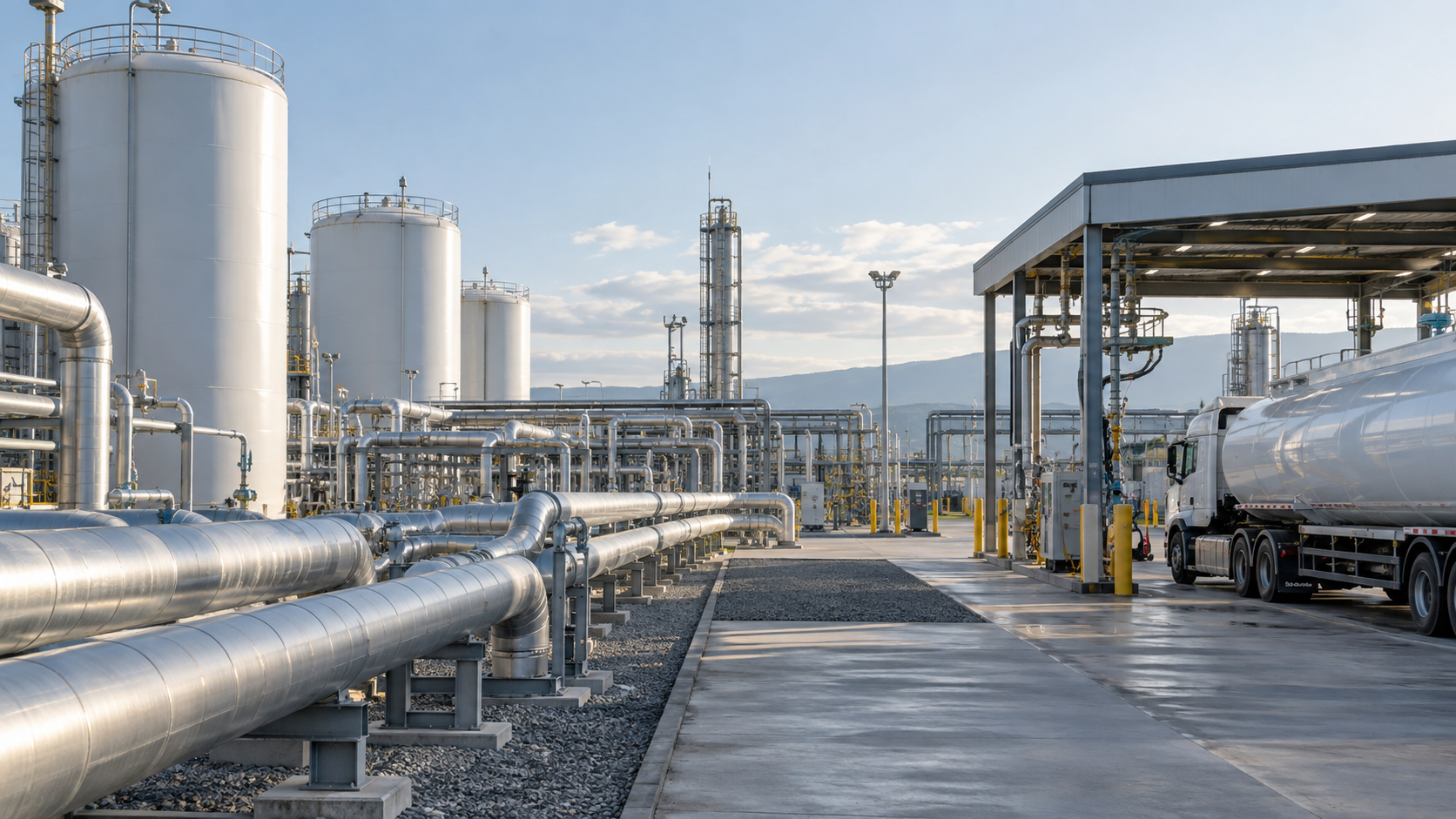
Hydrogen production plans are easier to announce than complete delivery chains. The IEA's Global Hydrogen Review 2026, published June 18, puts numbers around that gap: its infrastructure chapter counts more than 40,000 kilometres of announced hydrogen pipelines by 2035, but only 9% of that length is operational or backed by committed investment.
That is a measure of project status by length, not a forecast of delivered hydrogen volume. It nevertheless highlights a commercial problem. A production plant and an industrial customer can both be real while the connection between them remains incomplete.
Europe's 2026 grant announcements show progress on another part of the chain. They also illustrate why a signed funding agreement should not be mistaken for an operating supply system. The useful question for a buyer is which dependencies have been resolved and which still determine when hydrogen can arrive.
Read the infrastructure inventory at its own scale
The IEA's trade and infrastructure chapter separates pipelines, underground storage and trade projects. These categories use different units and time horizons. Kilometres of pipeline cannot be added to storage capacity or annual production to produce a meaningful total.
A long route may connect a different market from a short industrial link. Similarly, storage can make a delivery arrangement more flexible without increasing the rated capacity of the production plant. The commercial role of each asset matters as much as its size.
Our interpretation is that a project assessment should begin with the delivery chain rather than a combined headline number. Identify where hydrogen is made, what physical form reaches the customer and which assets connect the two. Then attach a documented stage to each asset.
A grant agreement moves one dependency forward
On January 20, 2026, CINEA reported six signed grant agreements under the 2024 Innovation Fund hydrogen auction. The announced support totalled €270.6 million for projects in Spain, Finland and Norway.
The same notice describes financial close and production as subsequent milestones. Its support mechanism is a premium linked to certified and verified production, with a defined period for recipients to reach those stages. The source calls the qualifying product renewable fuel of non-biological origin, or RFNBO, hydrogen; this article does not independently certify any project's output.
For a business reader, the event is substantial: the projects had advanced beyond a selection announcement to signed agreements. It still does not establish their complete financing, transport arrangements or sustained delivery. Nor does the announced grant total equal the total capital cost of the six developments.
This is a January milestone, not a claim that every project's status remained unchanged in September.
Match the delivery form to the customer's need
The IEA distinguishes trade in hydrogen from trade in hydrogen-derived products. That difference belongs in a buyer's commercial assessment.
A customer that can use a delivered derivative directly faces a different chain from one that requires pure hydrogen after shipment. Conversion or reconversion introduces additional assets, responsibilities and operating requirements. The analysis here does not estimate those costs; it identifies why two apparently similar import proposals may serve different markets.
A useful project description therefore names the delivered product at the point of use. “Hydrogen equivalent” can help aggregate a market dataset, but it does not tell an individual customer what arrives at its gate.
The contract, terminal arrangement and receiving process must all describe a compatible product. A production announcement cannot settle that compatibility by itself.
Treat storage as a timing service
Storage is often described by capacity, but its commercial value also depends on timing. A buyer may require continuity while a producer's output varies or maintenance interrupts a transport asset.
Consider a hypothetical industrial customer whose supply contract starts before the planned storage facility is available. The production and pipeline assets could reach their milestones on time while the delivery arrangement still lacks the flexibility originally assumed.
The relevant questions would be who provides the interim service, how interruptions are handled and which party bears the additional cost. These are hypothetical contract questions, not reported shortcomings of the projects in CINEA's announcement.
The example explains why storage belongs in the same commercial map as production and transport. It is not simply an optional capacity number appended to a plant description.
Separate regional opportunity from a global total
The IEA identifies much of the infrastructure activity in Europe and China. Its global inventory is useful context, but it does not establish that a particular region's assets can serve another region's customers.
Local industrial clusters, proposed trade corridors and shipping terminals have different dependencies. Their prospects depend on the actual route, customers and development stages. A global increase can coexist with a missing connection in the market a buyer wants to enter.
This is why a national or international target should not replace a location-specific assessment. A buyer needs to know which commissioned assets are available to its proposed arrangement and which remain planned. A final investment decision, usually shortened to FID, is a commitment milestone; it is still distinct from commissioning and operation.
Use a delivery-chain status map
A practical assessment can be compact. For production, transport, storage and receiving facilities, record the responsible developer or operator, documented stage and next dependency. Keep the evidence date beside each entry.
Then add the commercial connection: the counterparty, product, delivery period and whether the obligation is documented or only proposed. Unknown terms should remain unknown rather than being filled from a nearby project's announcement.
The 2026 evidence supports a mixed picture. Signed support agreements show projects advancing, while the IEA inventory retains a large gap between announced infrastructure and committed or operating assets. For a buyer, that means the most useful progress measure is a complete, compatible route to delivery. More announced capacity helps only when the surrounding chain can turn it into a service the customer can use.
Sources & evidence
Source material checked Sep 11, 2026. Reporting and analysis distinguish documented facts from company claims.
- Global Hydrogen Review 2026 ↗IEA
- Global Hydrogen Review 2026: Trade and infrastructure ↗IEA
- Six IF24 hydrogen auction winners sign grant agreements ↗CINEA / European Commission
AI-assisted research and drafting. Approved for publication by Nadia Venn on Sep 11, 2026.
Continue reading
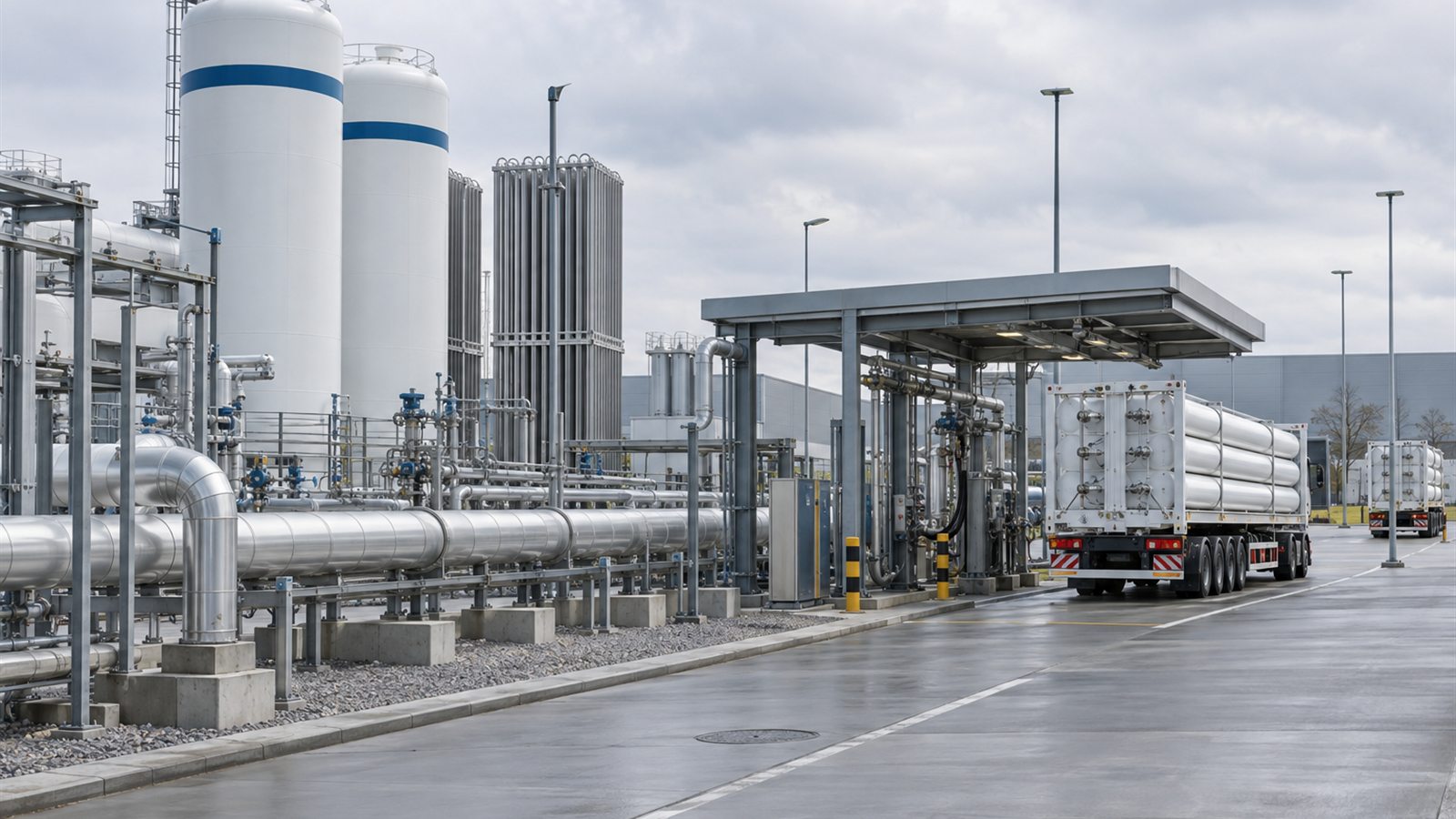
Air Liquide’s Marl investment puts distribution in focus
The company announced about €20 million for its hydrogen filling hub, with completion targeted for the end of 2027.
What “electrolytic hydrogen” does—and does not—tell you
The production method is a starting point. Electricity sourcing, emissions boundaries, and delivery need their own evidence.